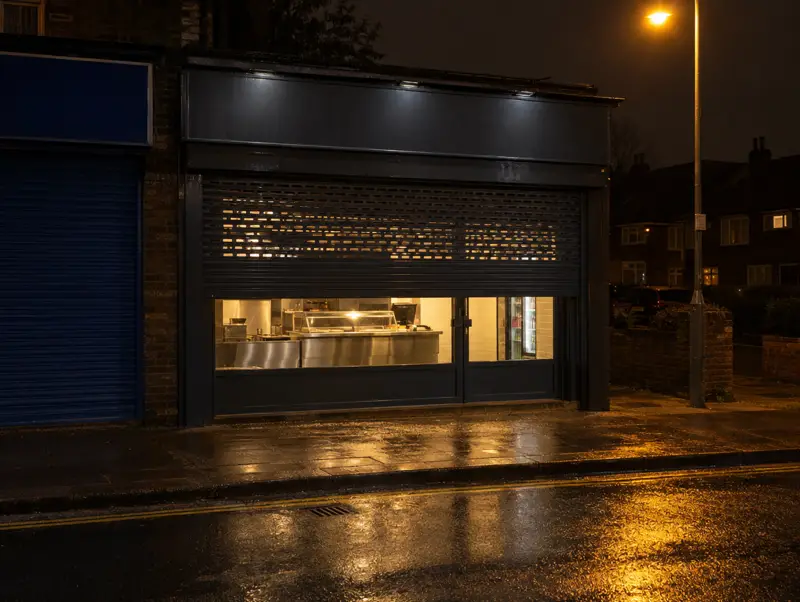
What does a late-opening food unit need from a shutter?
It needs electric operation, because the last person out is tired and closing up alone. A key switch means no bending down to padlocks at 1 am. The unit holds little to resell beyond the till and equipment, so the usual risks are late-night damage, a forced door and fire in the kitchen. Perforated, from £2,100 inc VAT (£1,750 plus VAT), keeps the menu readable after closing. The shop door takes constant use through the evening, so specify a closer and hinges for that.
Will a shutter cause noise problems with the flats above?
It can, if the curtain rattles in worn guides or the box is fixed where sound carries into a bedroom. Tell us at survey what sits above the shop. Box position, fixing points and regular servicing all help. Check your planning conditions too, because some food units have limits on opening hours.
Does grease damage roller shutters?
Yes, over time. Airborne grease settles on laths and in guides and picks up grit, so the curtain drags and the motor works harder. Keep the guides wiped down and book a regular service, at £174 per shutter inc VAT (£145 plus VAT). A shutter over a servery hatch sits in the worst of it, so ask for a finish that wipes clean.
Does a servery need a fire shutter?
It depends on the wall the hatch sits in, so ask your fire risk assessor for the rating in minutes before anything is ordered. Approved Document B ties the rating to the position: for example 30 minutes for access to an external escape route, and at least 60 minutes in a compartment wall separating buildings.
If a rolling shutter crosses a means of escape, it should be released by a heat sensor close to the door, and should not usually be closed by a smoke detector or fire alarm. The responsible person must keep it in working order under article 17 of the Fire Safety Order. See fire shutters explained. This is general guidance for England, not legal advice.
What should you ask your insurer?
Ask these before ordering, and get the answers in writing.
- Does the policy name a shutter type or security rating for the frontage? If your insurer asks for a rating, tell us before ordering and we will price a product certified to it and give you the certificate.
- Must the shutter be down and locked whenever the unit is closed?
- Does the kitchen or extraction wording say anything about the servery?
- Does the policy cover glass, and the door?
What should you specify, and what should you avoid?
Specify for late use and grease, and avoid anything that blocks an exit.
- Specify: electric operation with a manual override, a box that clears the menu board and sign, and an aluminium frontage planned with the shutter.
- Specify: a certificate for any fire-rated shutter, naming the rating you were asked for.
- Avoid: a shutter across your only exit without an answer from your fire risk assessor. Article 14 requires emergency doors to open easily and immediately.
- Avoid: fitting first and asking later. An external shutter usually needs planning permission, because Part 7 gives no right for one.
The survey and quotation for new work are free with no obligation. Repairs and servicing are paid call-outs, often within the week. Ask for a quote.
Common questions
Are perforated shutters good for restaurants and takeaways?
Usually yes. They keep the menu and lighting visible and let air through, but the holes hold grease and dust, so they need regular cleaning.
Who keeps a fire shutter maintained?
The responsible person for the premises, which is often the employer or the person in control of the unit. Your lease may also say who pays.
Sources
Related services
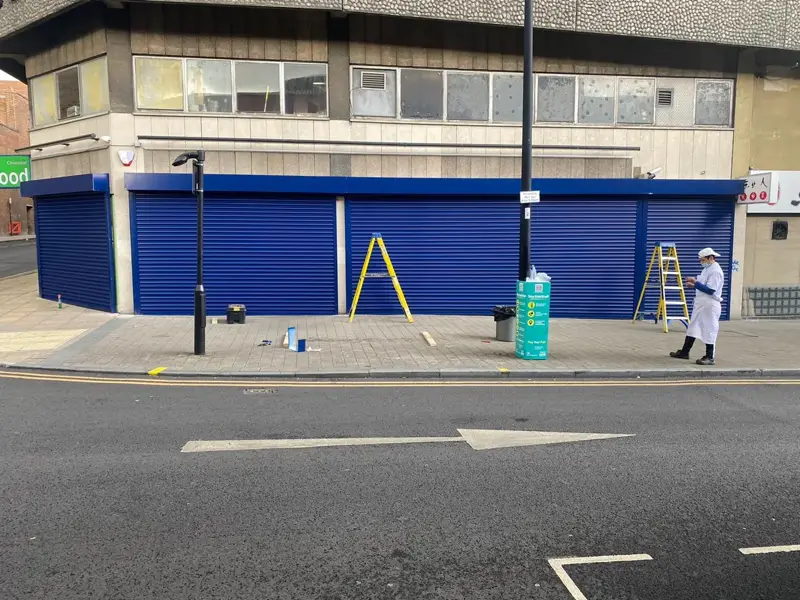
Electric roller shutters
Motorised shutters with key switch or remote control.
from £1,740 inc VAT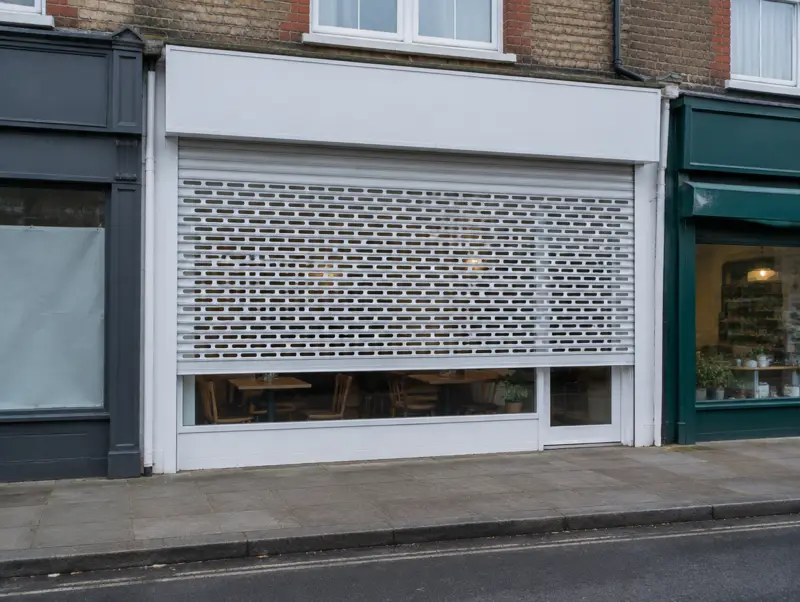
Perforated roller shutters
Vision shutters that keep the display visible after closing.
from £2,100 inc VAT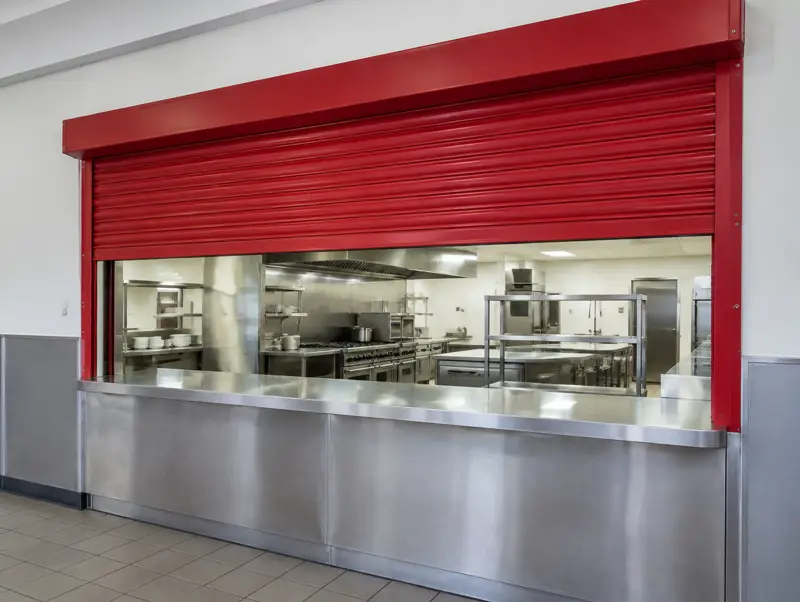
Fire-rated shutters
Tested assemblies for servery hatches and compartment openings.
from £3,840 inc VAT